
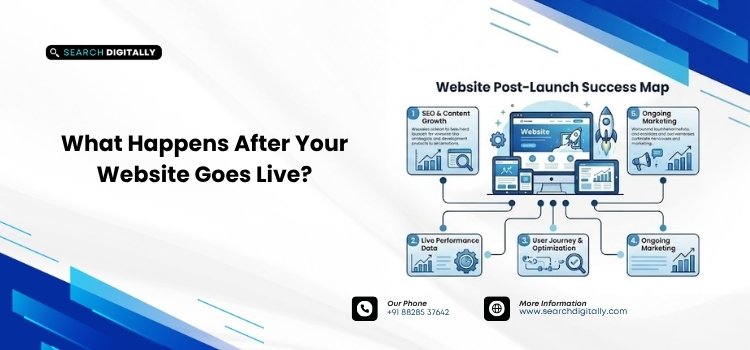
Going Live Is Just the Beginning
There’s a real sense of relief the moment your website goes live. After weeks, and sometimes months, of planning, design revisions, and approval of content, it becomes a place where people can actually go and work. For many small to medium-sized business owners, it is the finish line. The reality is it’s closer to the starting gun. Even if a site is well designed, it will sit inert and attract few visitors and even fewer leads if it doesn’t have a plan for what to do next. The days and weeks immediately after launch are when the hard work of increasing visibility, velocity, and conversions begins. If you’ve recently watched your website development timeline wrap up, this is the point where a different kind of work begins.
A Comprehensive Post-Launch Website Optimization Guide
Post-launch website optimization is the process of evaluating, tweaking, and building a website after it has been put live to the public. It can range from technical checks to search visibility and is often not a one-off. It’s like the difference between building a store and opening it, stocking the shelves, and ensuring that people who want to enter can find a way in.
Confirming Everything Works As It Should
Before anything else, go through the site the way a visitor would. If you’re running an online store, test all navigation links, all forms, and checkout flows. Typical issues that occur immediately after launch are broken links, missing images, and an unresponsive contact form. It also helps check the site on various devices and screen sizes, as responsive design may not be flawless across them. If your site doesn’t perform well on mobile devices, it may be time to review the fundamentals of responsive web design before proceeding.
Getting Your Site Indexed by Search Engines
A live website isn’t automatically visible on Google. Search engines must find, crawl, and index your pages to show them in their search results. Uploading your XML sitemap in Google Search Console and asking them to add some of the most important pages will greatly accelerate this process. Google’s documentation states that “Submitting a sitemap can help search engines discover pages they may not have found on your site, especially for newer or larger sites.
Your Website Launch Checklist for the First 30 Days
If the fundamentals are verified, move on to the activities that affect the site’s performance over the next 30 days. A practical website launch checklist for this stage usually includes:
- Verifying Google Analytics and Search Console are correctly connected and reporting data
- Setting up conversion tracking for form submissions, calls, or purchases
- Checking page load speed on both desktop and mobile
- Reviewing meta titles and descriptions across key landing pages
- Testing SSL certificate installation for a secure connection
- Setting up 301 redirects for any URLs that changed during the rebuild
Each of these can unravel the good work in the private realm. A slow page load or a missing redirect can be a trivial mistake, but both directly impact visitors’ time on the page and the page’s long-term ranking.
Monitoring Performance After Launch
After the site is live and indexed, the next few weeks will focus on observing the natural interactions of real visitors with the site. Traffic patterns, bounce rates, and time on page speak volumes in the first month more than any guess could ever have indicated.
| Metric | What to Watch For |
| Organic traffic | Gradual increase as pages get indexed and start ranking |
| Bounce rate | Unusually high rates may signal slow load times or unclear navigation |
| Page load speed | Should stay under 3 seconds on mobile for most industries |
| Form submissions | Confirms your conversion tracking and lead flow are working |
These numbers rarely look perfect in the first few weeks, and that’s expected. It is important to see whether they are moving in the right direction as you continue to make incremental changes.
Common Mistakes Businesses Make After Launch
Many companies consider the end of a project to be the launch day, not the beginning. The most frequently overlooked are the following: not updating all marketing collateral to include new URLs, not updating Google Business Profile links, and assuming that rankings from an old site will automatically carry over. If your business has recently completed a full rebuild, it will pay to review your initial website development plan to ensure that any planned work was not left incomplete before focusing on growth.
Conclusion
When your website is up and running, it’s the beginning of what you should do, not the end. The technical bits, search engine optimization, a good launch checklist, and regular performance monitoring are all part of making a freshly constructed site a business success. Optimizing a website after it launches is not a one-and-done process; it can impact your new website’s return on investment over the coming months.
FAQs
Q1. How long after a website goes live does it start ranking on Google?
Most new websites start appearing in search results within a few weeks of indexing, but meaningful rankings for competitive keywords typically take three to six months of consistent optimization and content activity.
Q2. What is the most important step in a website launch checklist?
Connecting analytics and Search Console tracking is arguably the most critical step, since every other post-launch decision depends on accurate data.
Q3. Do I need ongoing SEO after my website goes live, or is it a one-time task?
SEO is an ongoing process. Search algorithms, competitor activity, and your own business offerings change over time, so post-launch website optimization needs regular attention rather than a single round of fixes.
If your website recently went live and you’re not sure what to prioritize next, our team can walk you through your post-launch website optimization checklist. Reach out at support@searchdigitally.com to get your new site performing the way it should.