
Why Your Brand Is More Than Just a Logo?
When most new entrepreneurs are asked what a brand is, they often think of a logo. That is a good start, but it is not the bigger picture. A Building a brand identity is about fostering the way people recognize, think about, and remember your business even after they click off the web page or walk out the door.
A powerful identity makes marketing easier, pricing more defensible, and your team more aligned. A weak one means that you have to reiterate your identity every time.
This guide takes you through the elements of a brand identity, how to create one step-by-step, and how to maintain it as you expand. It is designed for founders, marketers, and business owners who want a brand for the long haul, not one that needs rebuilding every two years.
What Is Brand Identity, Exactly?
Brand identity is made up of the signals a business provides, both visible and verbal. It’s the embodiment of your company’s personality: name, logo, colours, typography, tone of voice and your customer approach.
Several ideas are often confused; it helps to differentiate them.
| Concept | What it means | Who controls it |
| Brand identity | What you deliberately show the world | You |
| Brand image | How people actually perceive you | Your audience |
| Branding | The ongoing work that links the two | Both |
The objective is to bridge the gap between identity and image and let people see you as you want.
Start With a Brand Identity Strategy
Design comes second. Strategy comes first. A solid brand identity strategy has a few questions pre-established before one picks up a design tool:
- Purpose: why does the business exist beyond making money?
- Audience: who are you serving, and what do they care about?
- Positioning: what do you offer that competitors do not?
- Values: which two or three principles guide your decisions?
- Personality: if your brand were a person, how would it speak?
If you can’t explain your position in two sentences, then customers will have trouble.
Do some competitor research as well. Gather 10 participants and record their colour, message, and tone. If everyone in your industry uses navy blue and stock photography, a warmer palette may help you stand out.
Brand Identity Design: The Core Elements
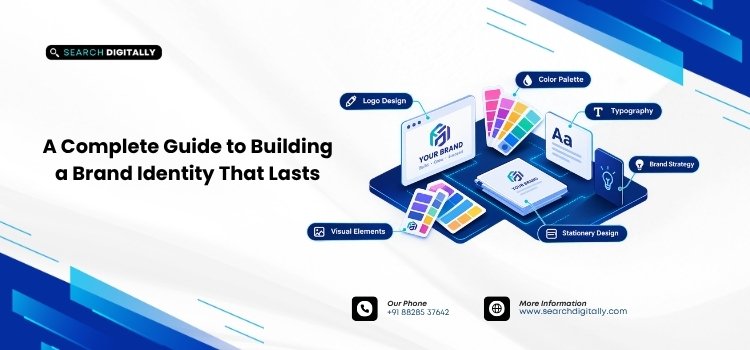
Once you’ve set the strategy, brand identity design brings it into the visual and audible realm. Each element should feel like a member of the same family.
Logo and Visual Marks
A good logo is simple, memorable and works at any size, from a favicon to a billboard. Create a large version, a small version, and a monochrome version for any placement.
Colour and Typography
Colour evokes feeling fast. Choose one or two main colours, a few supporting shades and a neutral. Use them with no more than two fonts, one for headings and one for the body text.
Voice and Messaging
Voice is the aspect that most businesses overlook. Choose the tone of your voice: formal, friendly, bold, reassuring, technical or plain. Next, add a short tagline and some main messages that you can use throughout your team.
How to Choose Between Brand Identity Companies?
Not all businesses require an agency, but many do. When comparing brand identity companies, don’t just consider pretty portfolios.
- Process: do they start with research or go straight to logo concepts?
- Range: can they deliver guidelines, templates and rollout support?
- Fit: have they worked with businesses of your size and sector?
- Ownership: you should receive all final files and full usage rights.
Request references, and ask them what happened after the launch. A good partner is concerned about how your identity looks in the real world as well as in a presentation. If you are also doing social campaigns, our blog library deals with the relationship between branding and social media
Keeping Your Brand Identity Consistent
Many brands start well and then drift.
Avoid this by simply creating a brand guidelines document. It should include information on logo usage, colour codes, fonts, tone of voice and a few examples of what not to do. Share it with all content creators, including freelancers.
Then check your identity every 3 months. Look at your website, social profiles, email signatures and printed pieces side-by-side. Consistent visuals also help your search presence, as we explain in our guides on SEO and web design
Finally, protect what you have built. Trademark your name and logo where appropriate; don’t let others capitalize on the image that you have worked so hard to build.
Conclusion
Building a brand identity is a process, not a one-off project. Start with a brand identity strategy grounded in purpose, audience, positioning, and values. Then you translate it into brand identity design: the logo, colours, typography, and voice. If you need support, compare brand identity companies on process, variety, fit, and ownership.
Most importantly, record your decisions and check them often. A consistent brand becomes familiar, and familiarity builds trust over time.
FAQs
Q1. How long does it take to create a brand identity?
It takes about 4-8 weeks for a small business, including research, strategy, design, and guidelines. For larger organisations, with multiple audiences and products, it can take three months or more.
Q2. How much should a startup spend on brand identity design?
There isn’t a set number. The price you pay will vary depending on whether you hire a freelancer, studio, or larger agency. Set a budget based on your stage.
Q3. When should a business refresh its brand identity?
Make a refresh when your audience, offering or market position clearly has changed or if your materials look inconsistent. A small update to colours or typography is often enough. A complete rebrand is usually not required.
Ready to shape an identity that lasts? Get in touch with the Search Digitally team through our contact page or email us at support@searchdigitally.com.