
SEO Explained: Where to Start When You’re New to Search
You’ve interacted with SEO before if you’ve ever typed a question into Google and ended up on a helpful article. So what is SEO, exactly? Search Engine Optimization is the technique of optimizing a website’s content, structure, and reputation to make it understandable, trusted, and visible to the right audience through search engines. It isn’t something you do once and for all; it’s an ongoing process of research, writing, and technical cleanup that can help pages reach the results without paying for ads. SEO fundamentals are among the most useful skills to learn if you are beginning your blog or running content for your business, as organic search continues to drive a massive portion of traffic to the internet every day.
Key Takeaways
- SEO is about gaining visibility in search results, not paying for it.
- Search engines use crawling, indexing, and hundreds of signals to rank pages.
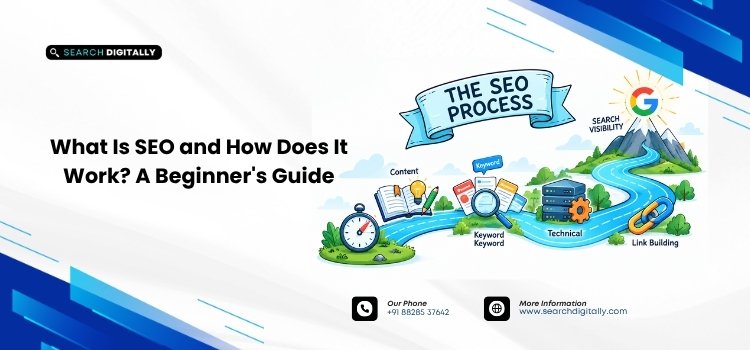
- The three pillars of SEO are on-page, technical, and off-page optimization.
- Most web pages get little to no organic traffic, so doing SEO basics well is an advantage.
- Results build over months, so consistency matters more than shortcuts.
What Is SEO, Really?
SEO is about aligning your content with what your audience is looking for and ensuring a search engine can interpret and rank it. According to BrightEdge, about 68% of online experiences start with a search engine, so being found for visibility matters. In the case of “best running shoes for flat feet” or “how to register a business in Mumbai,” the search engine searches its index and presents you with those pages that can answer the question well. SEO is how you get your page among those answers.
This helps distinguish SEO from paid advertising. Pay-per-click ads appear at the top because the business paid for them, and when the advertising budget expires, the traffic ends. Organic rankings, on the other hand, rely on relevance and trust, and an optimized page can continue to drive traffic for years after publication, making SEO a long-term investment rather than a short-term campaign.
How Does SEO Work? The Three-Stage Process
The best way to understand how SEO works is to look at the three steps search engines follow behind the scenes. If any of these steps fail, your content won’t appear in results, no matter how well you’ve written it.
Crawling. Bots discover pages by following links across the web; a page with no links and no sitemap may never get found.
Ranking. The search engine sorts pages that match the query using hundreds of signals, from keyword relevance to page speed to the quality of links pointing back to the page, putting the best matches near the top.
This is where patience matters. According to Ahrefs research, most pages in the top ten positions for a given keyword have been around for more than 3 years, which is a good reminder that SEO fundamentals take time to build and don’t deliver instant results.
The Three Pillars: On-Page, Technical, and Off-Page SEO
Most SEO work falls under one of three categories.
On-Page SEO
On-page SEO is optimizing what you can directly on a page: the title tags, the headings, the body content, internal links, image ALT tags. It starts with keyword research, then integrates keywords into content that solves the searcher’s query, not just keyword stuffing.
Technical SEO
Technical SEO makes sure search engines can access and understand your site:
- Fast, mobile-friendly page load times
- A straightforward site structure and logical navigation.
- An accurate XML sitemap and configured robots.txt
- Secure HTTPS, no broken links or duplicate content
Off-Page SEO
Off-page SEO is mostly about backlinks: links from other websites pointing back to yours. Search engines see these as votes of confidence, so pages with backlinks from trustworthy websites rank higher. This may also involve brand mentions and digital PR.
The technical SEO audit checklist is part of a Search Digitally blog post about the basics of technical SEO.
Why SEO Basics Matter More Than Most Beginners Expect
It’s easy to underestimate how competitive search results are. Analyzing billions of pages, Ahrefs discovered that most pages receive no organic traffic from Google, for a variety of reasons, primarily because they weren’t properly optimized or have a poor technical foundation to be indexed. If a beginner puts in the time to learn SEO at a basic level, they’re already ahead of most published content.
Search intent is another piece beginners often skip. Ask the searcher what they are looking for before you write: to purchase an item, compare options, or learn a concept. Content type matches intent; how-to, comparison, and quick definition tables directly affect how a page performs.
A Practical Beginner’s Guide to Getting Started
After learning the fundamentals, it is time to dig deeper into execution. If you want to go beyond the basics, you can follow the tactics in more detail in Search Digitally’s definitive guide to ranking higher on Google.
- Pick a focus keyword that aligns with your audience’s search intent.
- Research top-ranking pages for that keyword to see what searchers expect.
- Write content that answers the query, placing the keyword in the title, first paragraph, and a subheading.
- Fix the technical basics: Page speed, mobile friendliness, and a working sitemap.
- Earn a few quality backlinks by creating content worth referencing.
- Track rankings and traffic to see what is working.
This doesn’t require a huge budget, simply consistency, research and patience.
Conclusion
SEO is the art of helping search engines discover, comprehend and rank your content for the people searching for it. It works through crawling, indexing, and ranking, and it rests on three pillars: on-page, technical, and off-page SEO. It doesn’t happen overnight, but if a beginner implements the following SEO basics regularly, they build a channel that keeps paying off.
FAQs
Q1. Is SEO still worth learning in the age of AI search?
Yes. While AI-driven results are derived from indexed pages, the basics of SEO are still crucial.
Q2. How long does it take to see SEO results for a new website?
Most people starting out make significant progress in 3-6 months.
Q3. Can I do SEO myself without hiring an agency?
Yes, particularly on-page activities. As a website expands, technical SEO and link building can benefit greatly from professional expertise.
If you would rather have a team handle the research, writing, and technical fixes, contact Search Digitally to talk through where your site stands.