
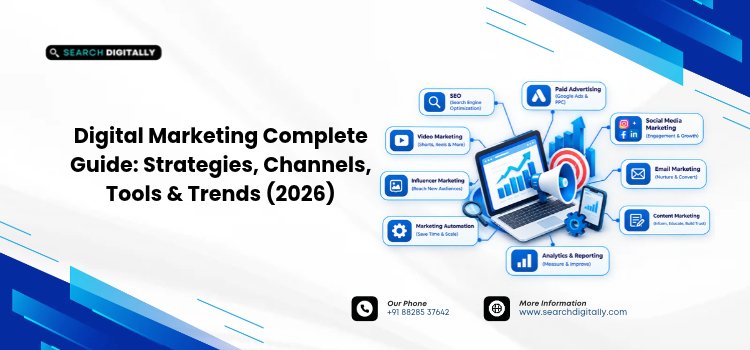
What Is Digital Marketing and Why Does It Matter in 2026?
Digital marketing is anything you do to connect with customers online, from search results and social feeds to inboxes and paid ads. It matters because buyers research, compare, and decide before calling a salesperson. If your business doesn’t appear, then a competitor will.
This digital marketing guide explains the whole picture in simple terms: how to create a viable digital marketing strategy, which channels to invest in, which tools will help you with your work, and which digital marketing trends are at the forefront in 2026. It’s for business owners, marketers and content creators who want to be seen on search engines and AI platforms, and not just another list of random tactics.
Start With a Digital Marketing Strategy, Not a Platform
Many campaigns fail because they begin with a tool or a trend instead of a goal. A good digital marketing strategy will work the other way around. To answer four questions first:
- Goal: What is marketing supposed to bring in the next 90 days: leads, sales or awareness?
- Audience: Who are you speaking to, and where do they spend time online?
- Budget: What is your total investment budget, and how will you allocate it across channels?
- Measurement: What numbers will tell you it’s working?
Keep the metrics few, such as cost per lead, conversion rate and organic traffic, and review them monthly. A plan is a loop, not a document: test, read the data, adjust. Whatever you publish along the way, Google’s advice to create helpful, reliable, people-first content is a good rule for every channel.
Digital Marketing Channels That Deserve Your Budget
You don’t need all of the channels. Start with the ones that match how your customers actually buy. These five digital marketing channels cover most businesses.
Search Engine Optimization (SEO)
SEO generates consistent, compounding traffic from people looking for what you actually offer. It is based on content that is relevant and a technically healthy site with trusted backlinks. If you’re new to it, start with our beginner’s guide to SEO, then learn how to build high-quality backlinks. Expect results to build over months, not days.
Content Marketing
Blogs, guides, videos and case studies address questions throughout the buying process. Good content also flows through your other channels, and one article can be transformed into social posts, email copy and an ad landing page. Write for a real reader first and keywords second.
Social Media Marketing
Instagram, LinkedIn and YouTube can help you create recognition and community. Choose 2 platforms instead of 6, and maintain a consistent look. A clear brand identity makes that much easier.
Email Marketing
Email goes to users who already know you, and you have the list. Segment your list, send helpful messages, avoid frequent discounts, and automate welcome and follow-up sequences. For many small businesses, it’s one of the most cost-effective channels.
Paid Advertising (PPC)
Google Ads, Meta Ads, and LinkedIn Ads quickly put your offer in front of ready buyers and are ideal for launches and seasonal pushes. Set a daily cap, track conversions instead of clicks, and refine targeting every week.
Digital Marketing Tools That Save Time and Prove Results
Tools won’t rescue a weak plan, but the right stack speeds up execution and keeps measurement honest. These digital marketing tools make for a practical starting point:
| Purpose | Example tools | What they help with |
| SEO research | Semrush, Ahrefs, Google Search Console | Keywords, rankings, site errors |
| Analytics | Google Analytics 4, Looker Studio | Traffic, conversions, reporting |
| Email and automation | Mailchimp, HubSpot, Zoho Campaigns | List segmentation, automated sequences |
| Social scheduling | Buffer, Hootsuite, Metricool | Planning and comparing posts |
| Design and video | Canva, CapCut | Fast graphics and short videos |
Start with free tools like Search Console and Analytics, and use paid tools only when you genuinely need them. A regular technical SEO audit will also detect issues that dashboards may not.
Digital Marketing Trends 2026 You Should Plan For
Four shifts stand out this year.
AI-driven search. People now ask questions in Google’s AI features, ChatGPT and Gemini, and often get an answer without clicking. Google’s own guidance on performing well in its AI search experiences sounds familiar: publish unique, valuable content and offer a great page experience. For the practical side, read how to rank in Google, ChatGPT and Gemini.
Short-form video. Reels, Shorts and TikTok are still stealing the show, even for B2B brands. Clips that explain one idea or show one result tend to work best.
First-party data. Privacy rules are tightening, and tracking is getting harder; build your own audience data through sign-ups, customer records, and on-site behaviour. It lets you personalize without guesswork.
Trust and authenticity. Consumers don’t want to watch generic content. Real expertise, named authors and honest claims make a brand memorable. AI can speed up a first draft, but humans are needed to maintain quality.
Conclusion
A good digital marketing strategy starts with clear goals and honest numbers. From there, choose the digital marketing channels your customers use, equip them with a well-thought-out set of digital marketing tools, and stay up to date on 2026 trends, especially AI search and first-party data. Follow this digital marketing checklist: Begin with one channel, track for a few months, then scale up.
FAQs
Q1. How do I create a digital marketing strategy for a small business?
Pick one goal, identify your ideal customer, select two channels and determine the monthly budget. Then measure some metrics and tweak monthly.
Q2. Which digital marketing channel is best for a small business?
It will depend on your objective. SEO and email build long-term value, while PPC delivers faster results. Most small businesses are successful using one organic channel and one paid channel.
Q3. How long does digital marketing take to show results?
Paid ads can provide traffic within just a few days. SEO and content marketing usually take a few months to gain momentum, so give them time before judging.
Talk to the Search Digitally team through our contact page or email us at support@searchdigitally.com.